Passage planning.

Here I sit in anticipation of, not only our departure but the inevitable “How on earth did we forget that” moment which I’m sure will come. I think everything is ready, bar the fresh food, and with only 3 days to go I’ve started to think about the first passage plan.

For the non sailors among you, a Passage Plan is a requirement of the Skipper to make a written plan for the passage the boat is making. It should contain ‘adequate ‘ detail of navigational and safety aspects to get the boat from one place to another.

So what are the considerations for making a passage plan.

No 1 is probably the weather. Should you go out in the first place, is your experience good enough, is your boat sea worthy enough. How will the wind direction affect the time it takes for your passage. how uncomfortable or dangerous will this make the sea,

No 2 is tide. Tide is a magical thing it turns land into sea and sea into land, twice a day. Tides flow and sometimes and currents can be very fast indeed. Tide can be a game changer especially when sailing around headlands, these are often referred to as tidal gates. Sail boats always prefer to travel with the tide rather than against. It’s like cycling uphill or downhill, you all know which is faster or easier. Compromises often have to be made especially on longer journeys. Depth of tide also becomes important when leaving and entering port. and you must work out It there enough to keep your boat afloat.

No 3 The route, This is broken down into 3 parts.

  • getting out from the harbour/river/anchorage etc, to the sea proper This includes obtaining permission to move, bouyage, channels, locks.
  • getting from A to B, missing out sandbanks, rocks, shipping lanes, rough water areas etc.
  • Locating, identifying and entering the destination port.

All the above are approached with a “What If” mentality to take into account, gear failure, illness, injury, weather changes.

I was taught to use the appropriate charts, tide tables, tidal stream atlases and weather reports from the radio. You can, and in remote places away from the internet, have to do it this way, but modern day advances means apps on your phone or tablet can do it all far quicker. I tend to use an app called Savvy Navvy, which doe’s a lot of the heavy calculations for you. My preliminary route plan for Friday is shown below, this will be updated just before we go to take account of the latest weather report.
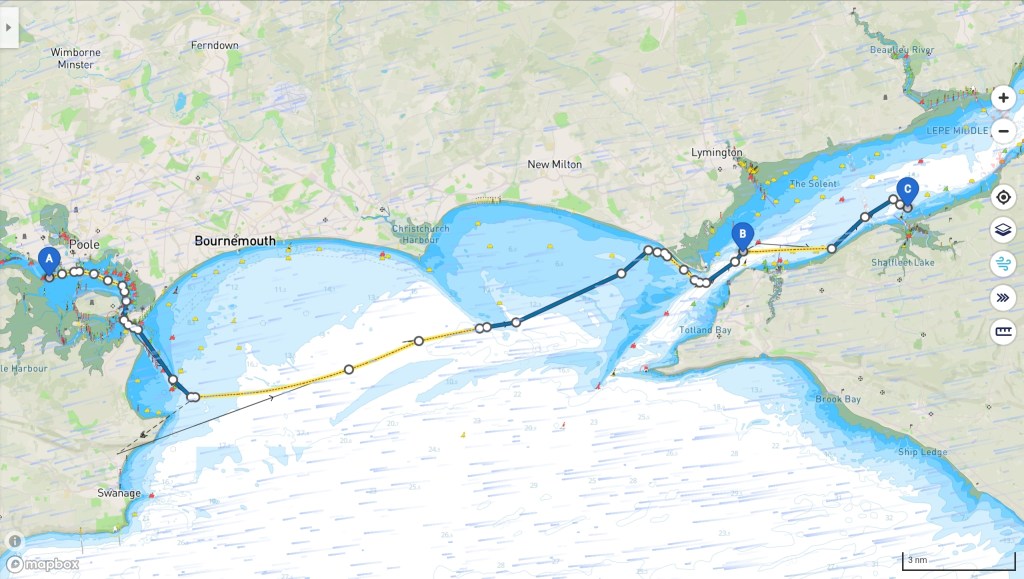
For fridays trip – From Wareham river to Newtown creek on the Isle of wight. There are a number of considerations.

A. Weather. The wind is coming directly from our destination, this will lengthen our trip by about 1/3

B The tide, the best time to leave Wareham will leave us with the worst time to cross from Poole to the Newtown Creek on the Isle of Wight. ie Tide against. This could add another hour or so to the journey.

So choices are to leave a little later, (more risk in a shallow river on a falling tide). Go at the original time and anchor somewhere for lunch to await a favourable tide, or as the wind is light and possibly unsailable. We could put on the iron sail. (engine) and motor against both tide and whatever wind there is.

So first option – rejected

Second option possible

Third option most likely.

Let’s see what conditions are like on the day. At the end of the day it’s only a plan and you often have to make dynamic decisions to account for unexpected conditions or events.
A Windy , rainy week

After storm Eunice the continuing bad weather has hampered work on the boat. So we have made use of the time with some more detailed planning. We have two strategic “must arrive” destinations on the trip. These are to facilitate medical treatments which Lou has arranged to be done on the boat. The first will be at Mallaig in Scotland late June, and the second in Padstow, mid August. The Harbour Masters have been contacted and both have agreed to arrange space for our arrival.

We have a freezer compartment on the boat and have over the years developed a number of recipes that get vacuum packed and frozen. Lou has been busy batch cooking to build up a stock. We will have to rely on our visiting crews to bring some with them as we can only carry about 12 meals at a time.

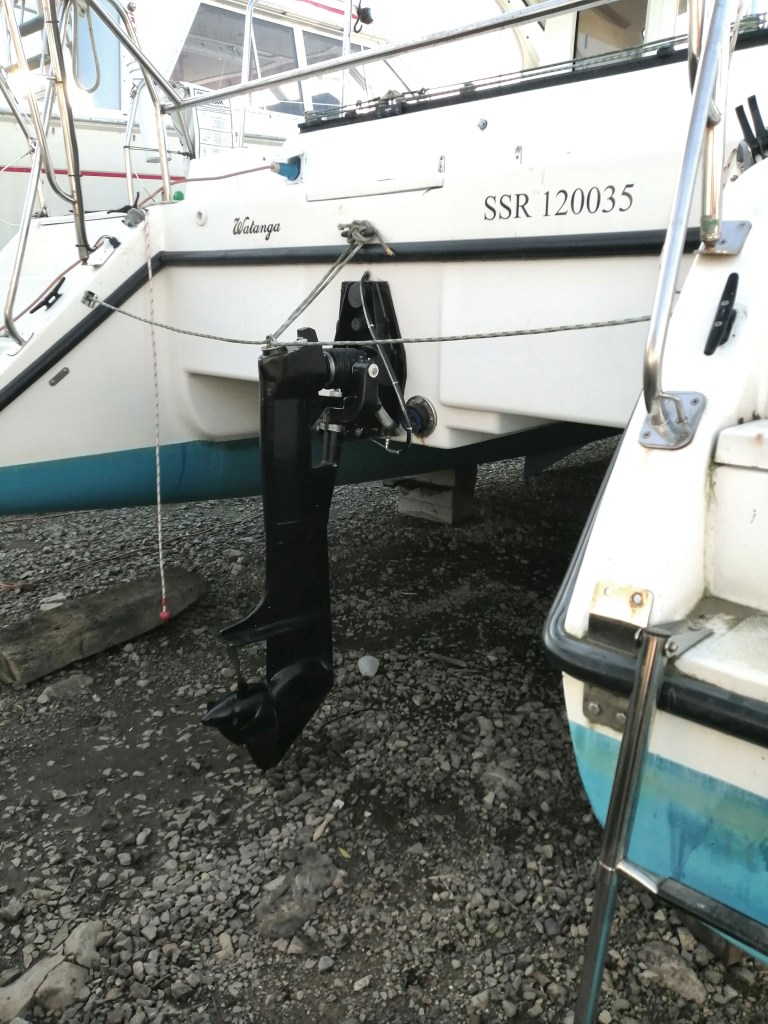
The drive leg has been gathering dust in the garage since it was refurbished back in October. So when a warmish Sunny day came along last week, it was time to reattach. A couple of hours work and the job was pretty much done. Just a couple of minor of snags to finish it off.

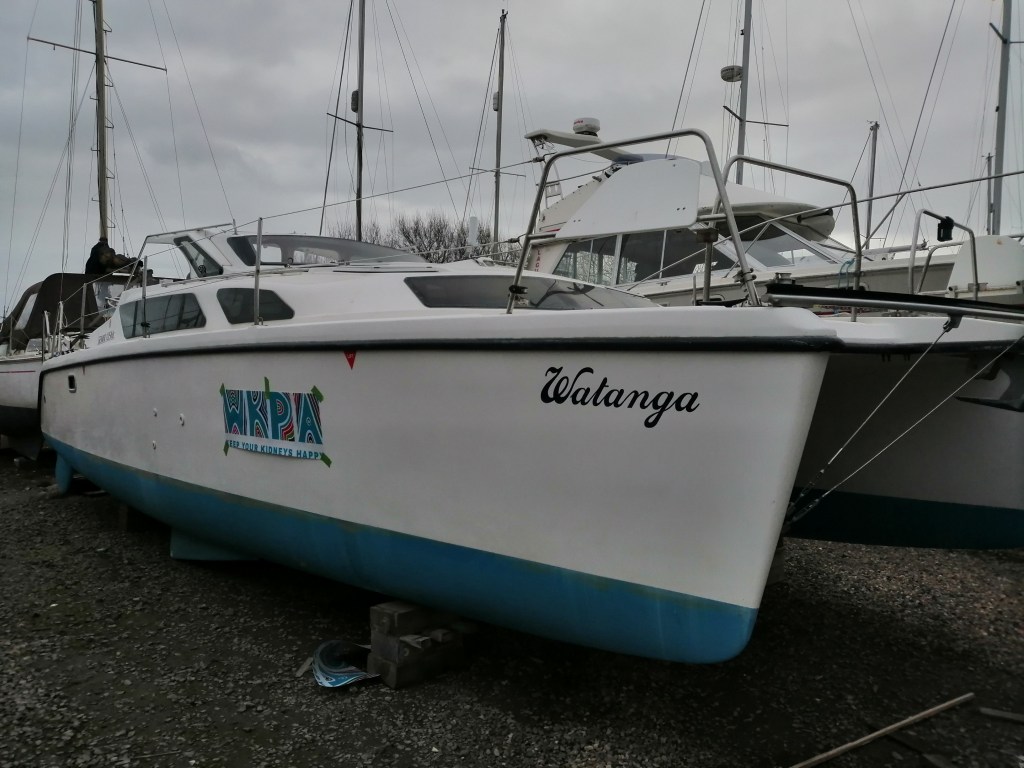
Lastly the WKPA boat stickers have arrived but the boat needs a polish before we stick them on. However I couldn’t resist seeing what they would look like.

The Wessex Kidney Patients Association is a charity that helps patients and their families deal with the upheaval caused by Kidney disease. If you enjoy reading our blog please consider giving to this cause . Many thanks Louise & Martin

“There are no ropes on a boat”.

New Standing Rigging.

What is Rigging, I hear you ask. Broadly speaking, on a boat, the collective term for the ropes, wires, chains and other bits and bobs that hold the mast up or adjust the sails is known as the rigging. There are two types. Standing and Running.

Standing Rigging is all the ropes that do not move and are primarily the ones that hold the mast up. Running rigging is all the ropes,(called sheets and guys, and lines) that are moved to adjust sails etc.

On most modern boats the standing rigging is made from stainless steel wire rope. Like all things they wear out and become brittle with age. Some insurance companies will insist on replacement of these items every 10 years especially those that race. Although mine has not stipulated this condition, at 17 years old I am renewing them.

Although there are DIY systems for producing new rigging these will generally be inferior to professionally produced items. This work is rather specialist in nature so I am having it done by a local company Quay Rigging.

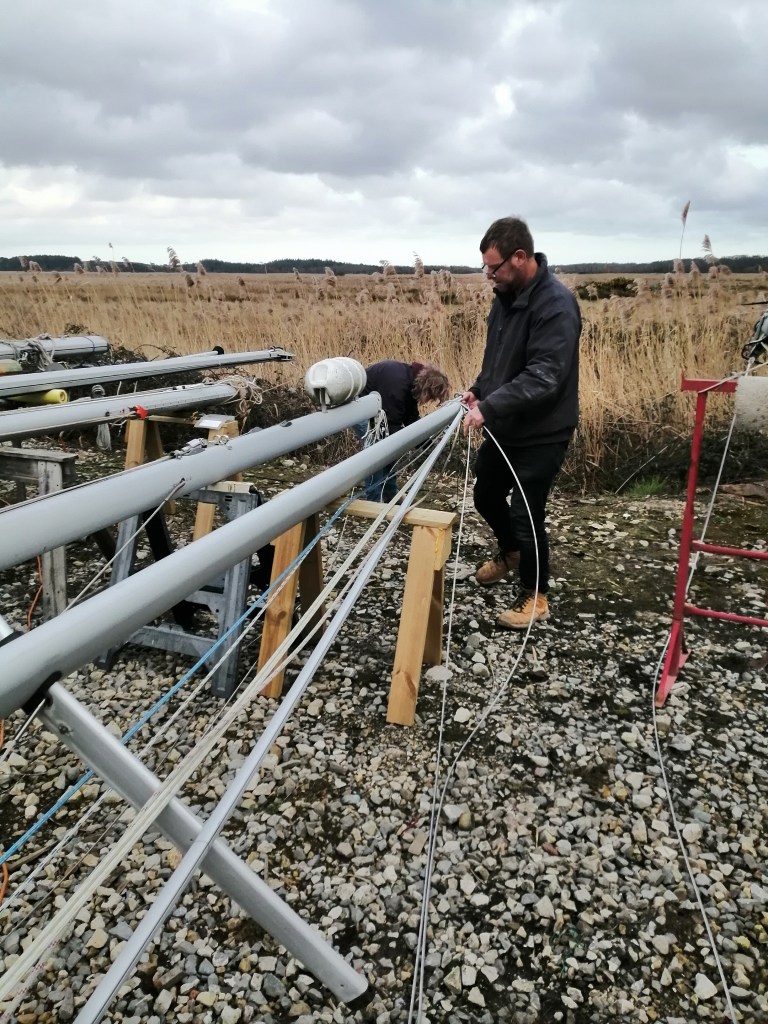
Today, at the boatyard I found Dave and Tess from Quay Rigging working on my mast, re-threading the various new shroud wires and stays. It won’t be set up until we put the mast up in a couple of months but it’s ready to go and another job off the list.

The Wessex Kidney Patients Association is a charity that helps patients and their families deal with the upheaval caused by Kidney disease. If you enjoy reading our blog please consider giving to this cause . Many thanks Louise & Martin

Gemini105MC Window Replacement.

This post is more for the D.I.Y.ers , and Gemini Owners. There is a link to an excellent “How to” video at the end of the post.

All our windows are starting to suffer from UV degradation, particularly the cockpit and forward window which are badly crazed and yellowed. Back in December I decided to have ago at replacing the cockpit window. My thoughts were, if I can make a good job of the biggest window, then the others should be a doddle.

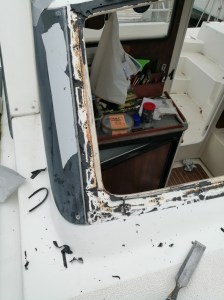
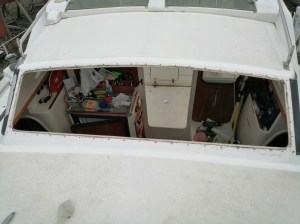
First job was to remove the window. Remove all the screws. Then with a modified bread knife, from the inside, I gently cut through the sealant to the outside in a series of stabbing motions. That Sikaflex is tenacious stuff, but slices quite easily. The perpex windscreen was then lifted clear. Cleaning off all the residue sealant was acheived with a sharp wood chisel and a good deal of care. Using rubbing alcohol to clean down.

A temporary cover was put over the hole to make the boat watertight while the new panel is made.

So far so good,

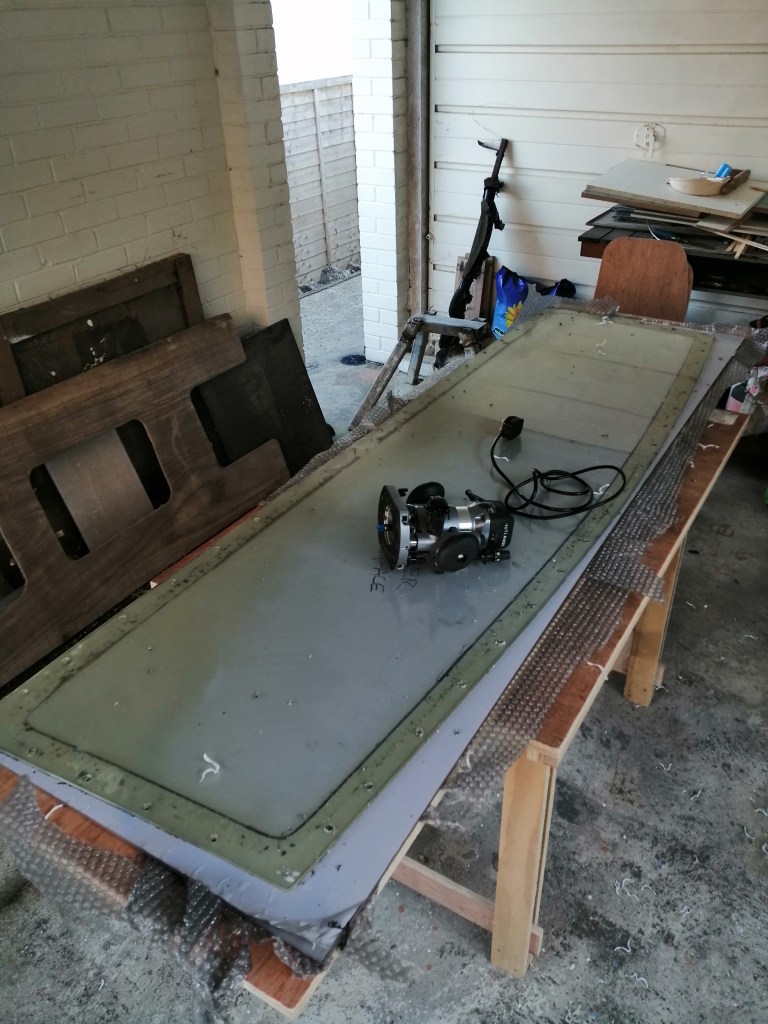
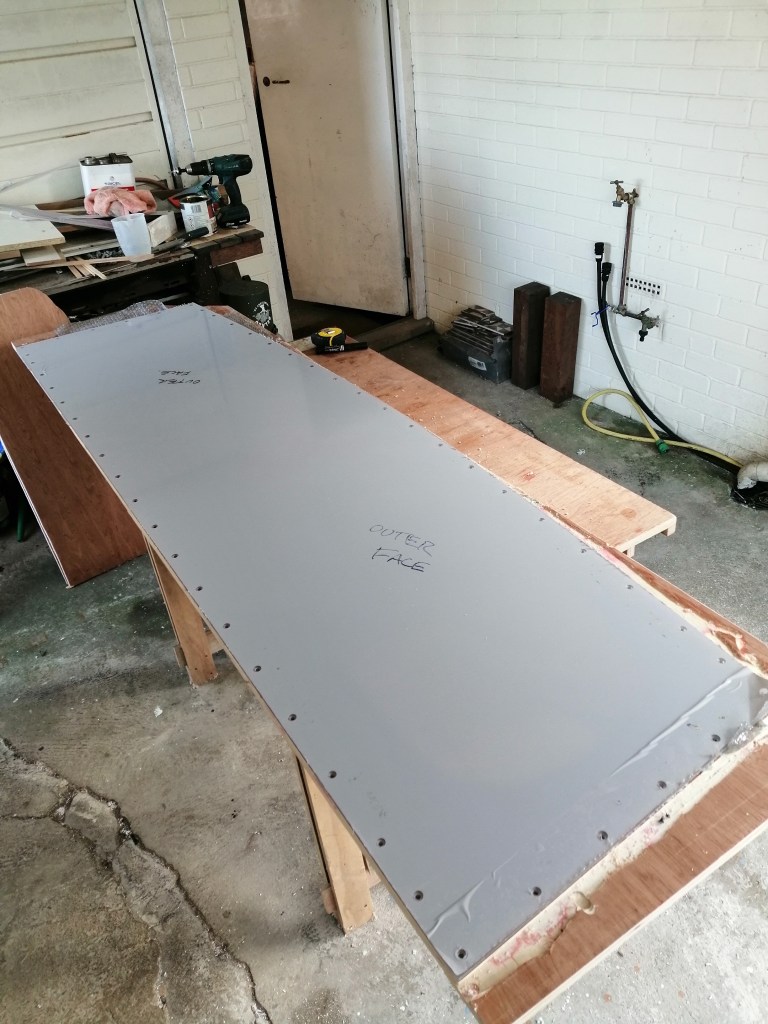
£200 saw a very large piece of ‘Makrolon” , polycarbonate sheet arrive. I started by clamping the old window on top of the new sheet and to a piece of plywood. The holes were drilled using the old window as a template , then with both pieces screwed together onto the plywood. Again using the old window as a template, the window shape was formed first with a jigsaw leaving 2-3 mm all round, then with a router with an edge trimming bit.

{Note. the tool must be dead sharp. run the router at a low speed or the makrolon will start melting. : Lubricate with water if necessary}

Final job was countersinking the holes.. I had bought a micro adjustable countersink for that job to give a consistent depth and finish.

A 25mm wide foam tape 3mm thick forms the inside edge detail to the window and this was the next thing to apply. Sika recommend a primer be applyied to polycarbonate to make it stick reliably, so that also needs applying. This stuff is more expensive than printer ink. It happens to be a very dense black colour which will be helpful to make the the job look good. ( any missed spots when you’re sealing will shine through and spoil the look of the finished job.)

The Sikaflex 295UV is not meant to be applied at low temperatures So the job was put on hold until early Feb when the temperature finally rose shove single figures.

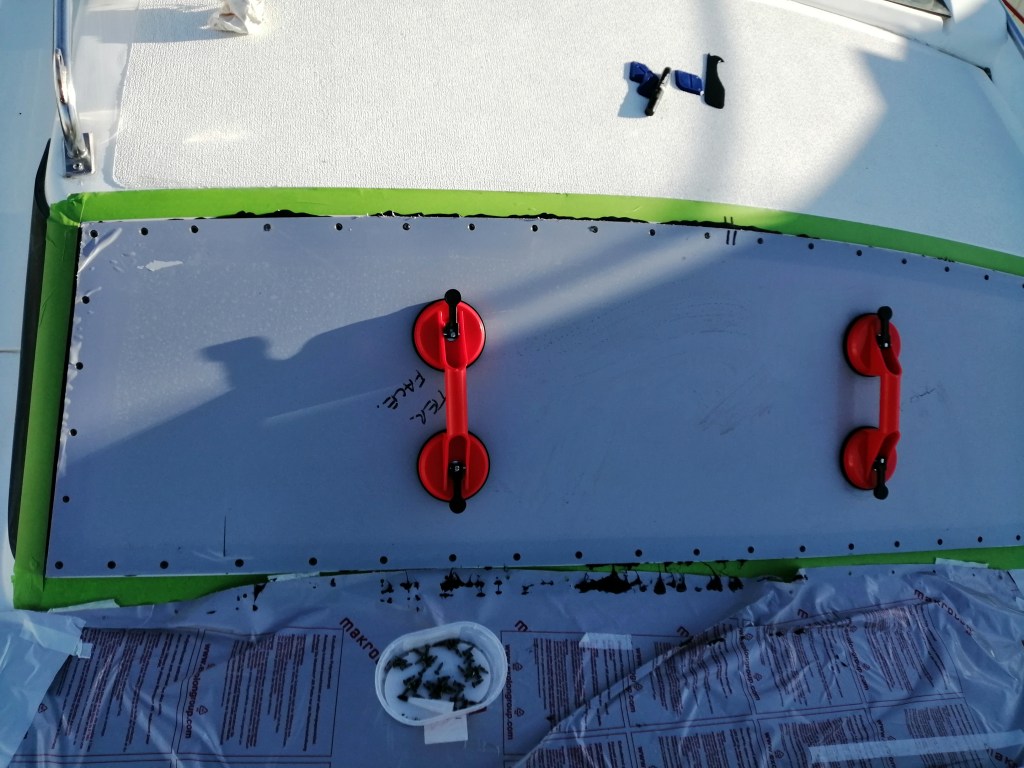
Next temporarily screw the window in place and tape round the edges for the sealant edge.

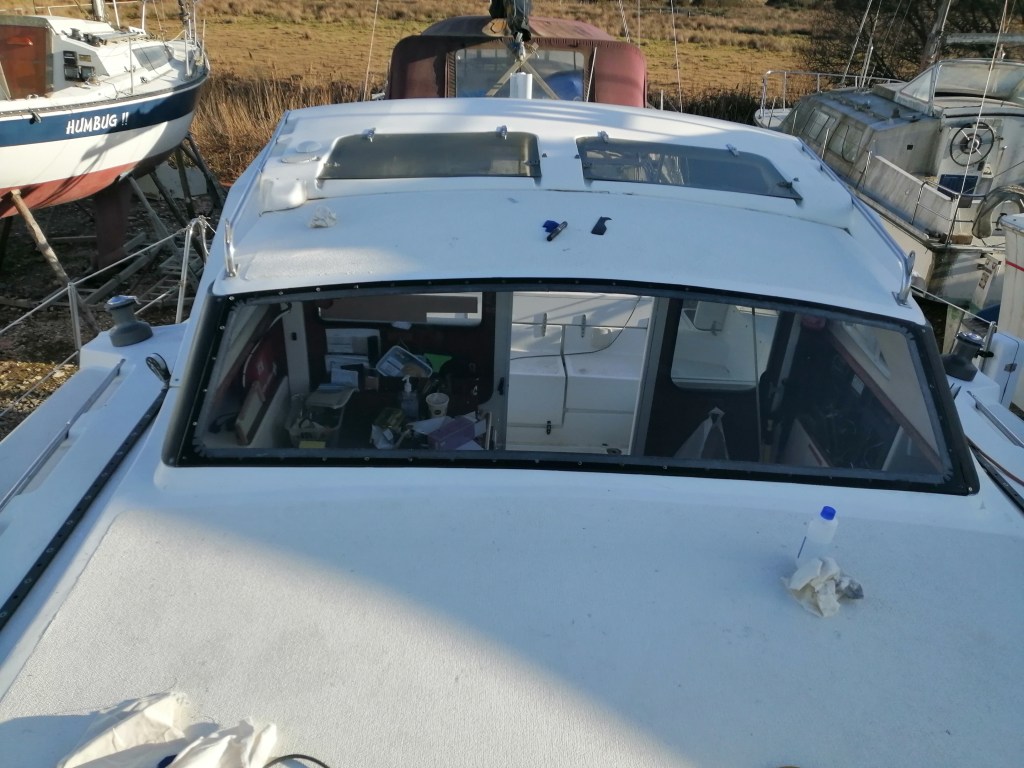
Now the big moment. Apply the sealant, generously, and carefully offer the window up into place and get some screws in but do not tighten up until ALL the screws are started. Then starting in the centre tighten gently to produce an even curve on the window (NO DIMPLES) Remember the screws do not form a structural part of the window, they simply hold it in place until the sealant cures. Once you are happy with the shape and all screws are of an even tension. I used a silicon edging tool to form the edge bead.

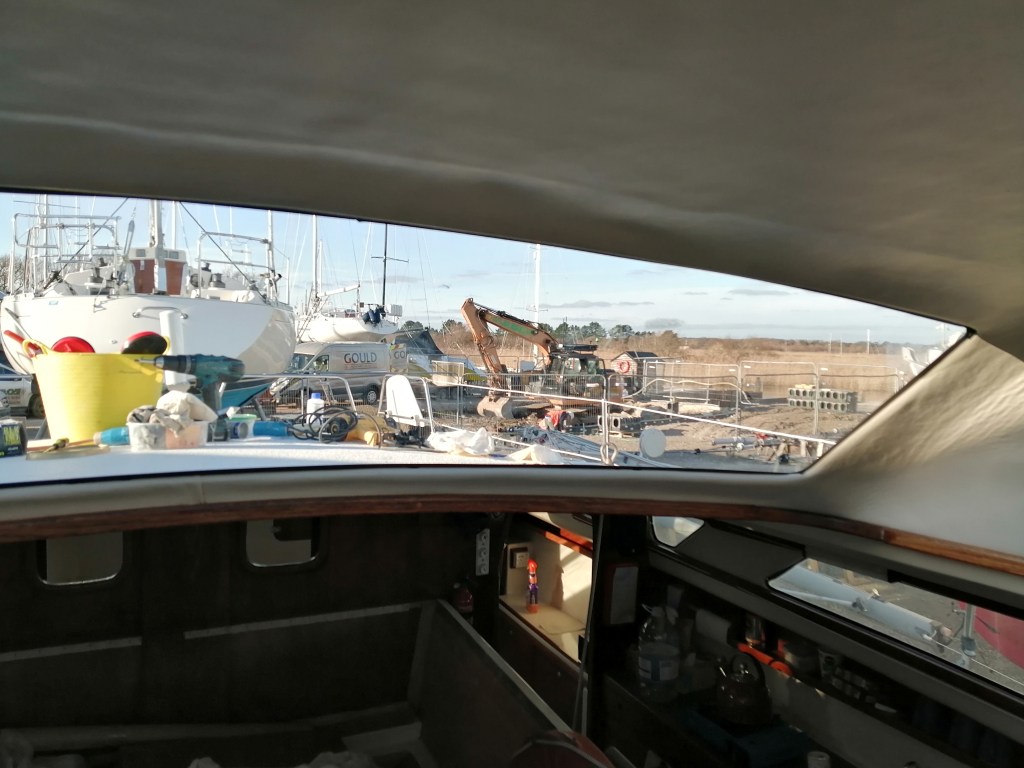
Makralon is unbelievably clear, actually clearer than glass. so the finish job looks almost as if there’s no windscreen in place. Really pleased with that.

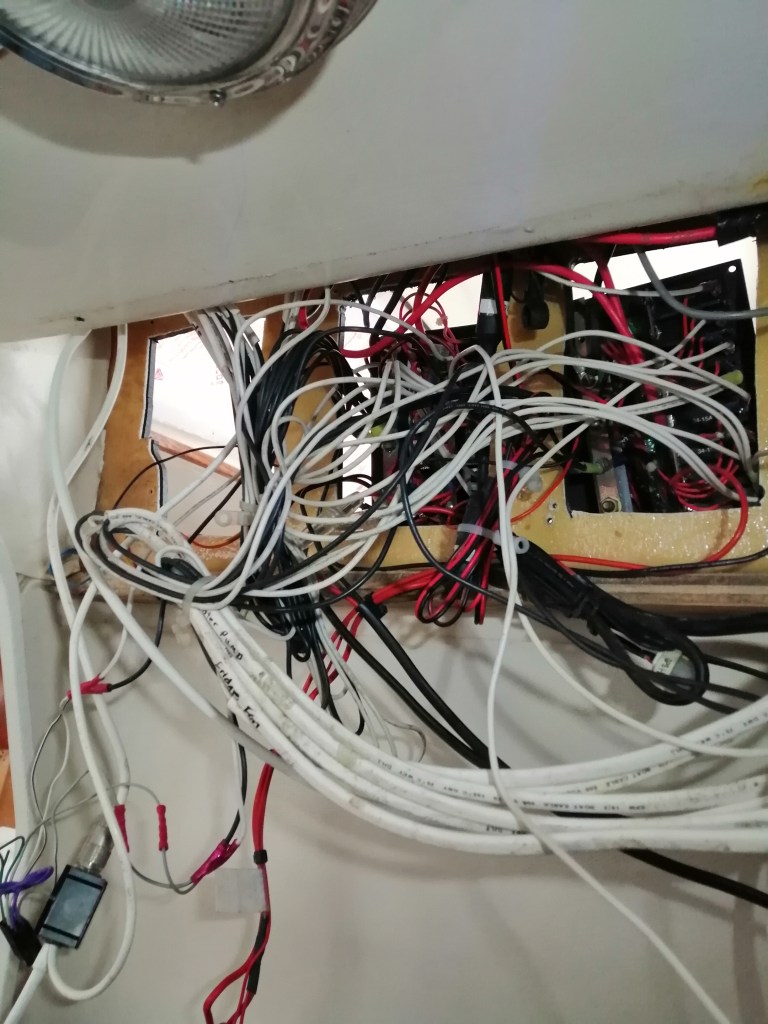
Whoops, I’ve opened up a can of worms here

The radio was loose in the electrical panel but I couldn’t get to it so I took a few panels off to find a right Birds nest of wires. Not the best piece of wiring work I’ve seen, there’s some corroded terminals and the whole thing needs tidying before tackling the original problem of the loose radio. I’m not sure that I can improve on the routing much, but most of the wires have been left way too long. A couple of days work here methinks!. Almost wished I’d not looked.

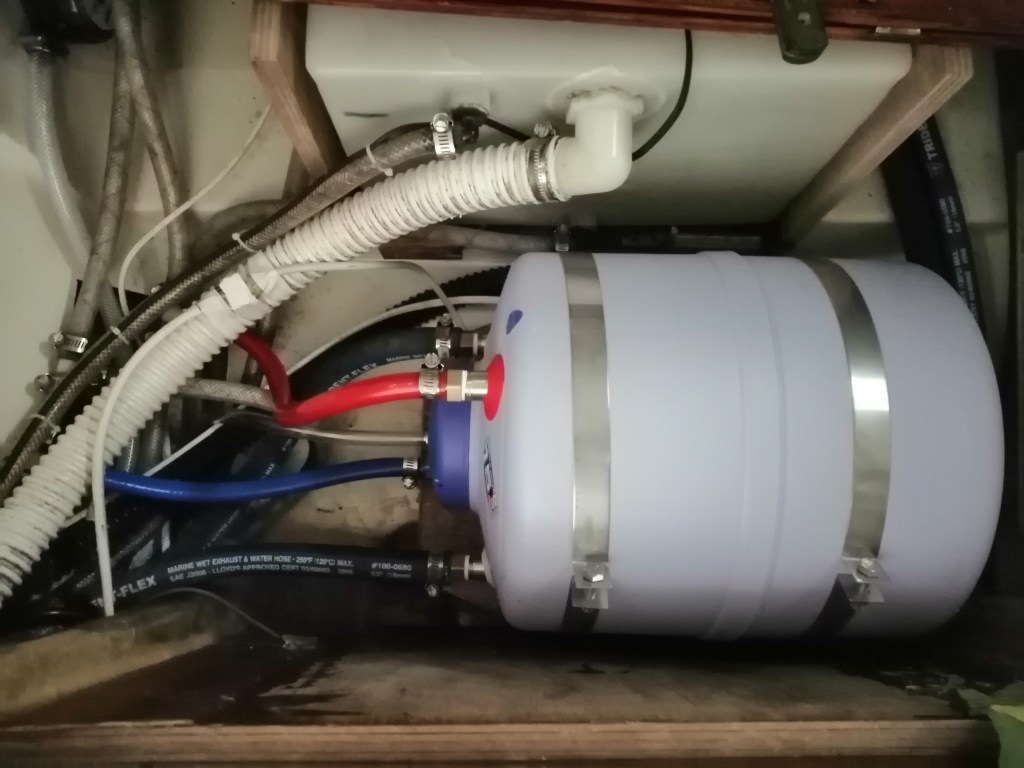
New Water heater (Calorifier)

For some time now the only way to get hot water for a shower was to run the engine for an hour or so. this stopped working last year and the immersion heater function hasn’t worked for some time. but if you are connected to shore power you are usually in a marina and have use of showers anyway. Theold unit, a ‘Dometic’ is still made, but in expensive and primarily only available in USA. So it was time for a change. A “QUICK NAUTIC BOILER – CALORIFIER, was purchased, and installed with shiny new hot and cold piping.

That’s another job off the list.

The Wessex Kidney Patients Association is a charity that helps patients and their families deal with the upheaval caused by Kidney disease. If you enjoy reading our blog please consider giving to this cause . Many thanks Louise & Martin